
1 inch is exactly 2.54 centimeters (25.4 millimeters). It is about the width of an adult thumb and roughly the size of a small paperclip, making it one of the easiest everyday measurements to visualize without a ruler.
12 Common Things That Are Exactly 1 Inch Long
Have you ever looked at a product online and wondered, “How long is an inch?” Although it sounds like a simple measurement, visualizing 1 inch without a ruler isn’t always easy. Whether you’re shopping online, measuring small household items, working on a DIY project, or helping children understand measurements, knowing what 1 inch actually looks like can make everyday tasks much easier.
In this guide, you’ll discover 12 common things that are exactly 1 inch long, along with quick conversions, practical comparisons, and simple ways to estimate 1 inch without using a measuring tool. By the end, you’ll be able to recognize this small measurement instantly using familiar objects around you.
How Long Is 1 Inch?
1 inch is a small unit of length commonly used in the imperial measurement system. It equals exactly 2.54 centimeters (cm) or 25.4 millimeters (mm). While an inch may seem tiny compared to larger measurements like feet or yards, it plays an important role in measuring small objects where accuracy matters.
The inch is widely used in the United States for everyday measurements, including product dimensions, tools, electronics, clothing sizes, and construction materials. Many items around you are designed using inch measurements, even when you do not notice it.
For example, the size of phone screens, computer monitors, screws, buttons, and small accessories are often described using inches. Knowing how long 1 inch looks in real life helps you make better estimates when shopping online, organizing spaces, or working on small projects.
A ruler is the most accurate way to measure 1 inch, but everyday objects can also help you visualize this length. The width of an adult thumb, a small paperclip, or other compact items can provide a quick reference when a measuring tool is not available.
Once you become familiar with this measurement, recognizing 1 inch becomes much easier because your brain starts connecting the number with real objects instead of just a value on a page.
Why Is 1 Inch a Common Measurement?
Although 1 inch is a small unit, it is one of the most commonly used measurements in everyday life. Its size makes it practical for describing objects that are too small for feet but large enough to need accurate measurement.
You can find inch measurements in many products around your home. Electronics, tools, clothing, accessories, and building materials often use inches because this unit provides a simple way to describe small differences in size.
For example, a device screen may be measured in inches, while screws, bolts, and hardware parts often use inch-based sizing. Understanding small measurements also helps when comparing different sizes, such as knowing the difference between How Long Is 2 Inches and 1 inch.
Inches are also useful when working with larger measurements. Since 12 inches make 1 foot, smaller inch measurements can easily be combined to describe bigger objects. For example, understanding How Long Is 5 Inches becomes much easier once you already have a clear picture of what 1 inch looks like.
Another reason inches remain popular is because they match many natural references found in daily life. Small objects, hand measurements, and common household items often fall within the inch range, making this unit easier for people to estimate visually.
Whether you are measuring a small object, checking product dimensions online, or completing a DIY project, having a good sense of 1 inch helps you make faster and more accurate decisions.
What Does 1 Inch Really Look Like?
A measurement like 1 inch can be difficult to imagine when you only see it written as a number. Since it is a small unit, many people underestimate its size or have trouble visualizing the exact distance without a ruler.
The easiest way to understand 1 inch is by comparing it with familiar objects you see every day. For many adults, the width of a thumb is close to 1 inch, which makes your own hand a useful quick reference tool.
Other small items can also help you recognize this measurement. A small paperclip, a button, a USB connector, or a similar compact object can give you a better visual idea of how much space 1 inch covers.
However, these comparisons are only estimates because everyday objects come in different sizes. A person’s thumb width may vary, and products like buttons or clips are not manufactured to exactly the same dimensions.
For an exact measurement, a ruler or measuring tape is always the best option. But for quick estimates, having a few familiar objects connected with the size of 1 inch makes it much easier to judge measurements in real life.
Once you learn what 1 inch looks like, understanding larger measurements becomes simpler too. For example, knowing this basic size helps you visualize measurements like How Long Is 2 Inches, How Long Is 3 Inches, and other common inch sizes.
12 Everyday Things That Help You Picture 1 Inch
Knowing the exact size of 1 inch becomes much easier when you connect it with objects you already see every day. Instead of trying to imagine a number, these familiar items give your brain a real reference point.
The objects below are not all manufactured to exactly 1 inch, but they are close enough to help you quickly understand what this small measurement looks like in real life.
1. A small paperclip
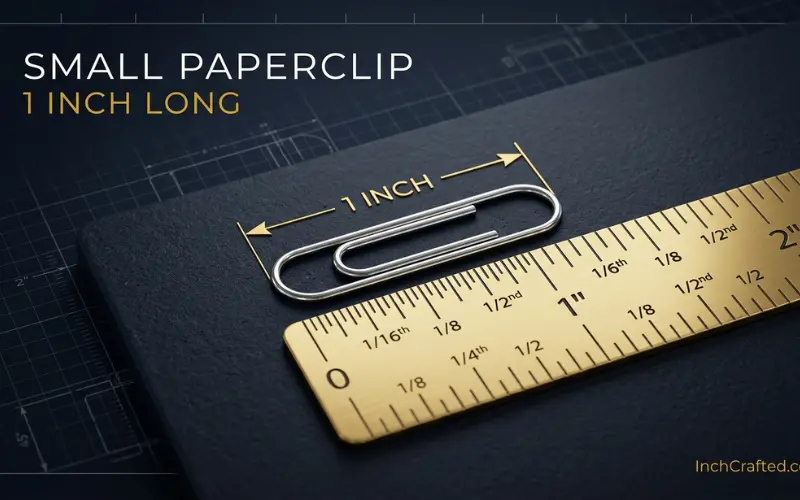
A small paperclip is one of the easiest objects to use when imagining 1 inch. Many standard small paperclips have a length close to this measurement, making them a useful reference when you do not have a ruler nearby.
Hold a paperclip between your fingers and look at its overall length. Although it appears tiny, it shows how much space a single inch actually covers.
Approximate size: About 1 inch long
2. Thumb width
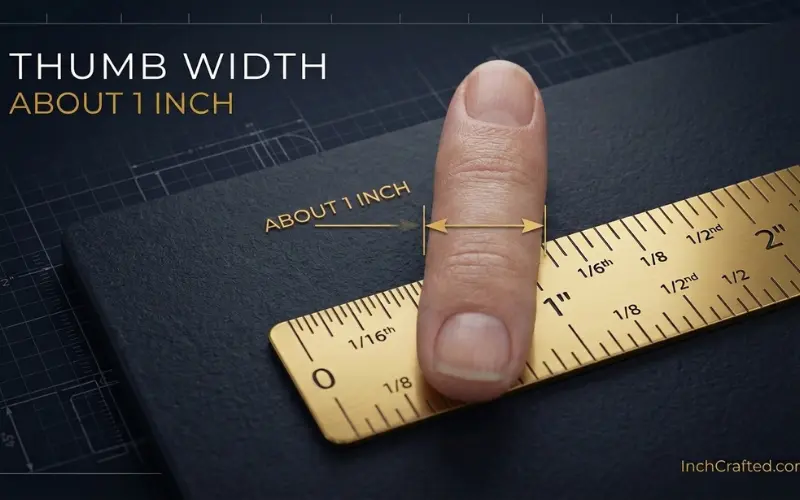
Your thumb can work like a simple measuring guide when estimating 1 inch. For many adults, the width of the thumb near the base is close to this size.
This makes your hand one of the most convenient references because you always have it available. However, thumb sizes vary from person to person, so it should only be used as a quick estimate.
Approximate size: Around 1 inch wide (varies by person)
3. Bottle cap height
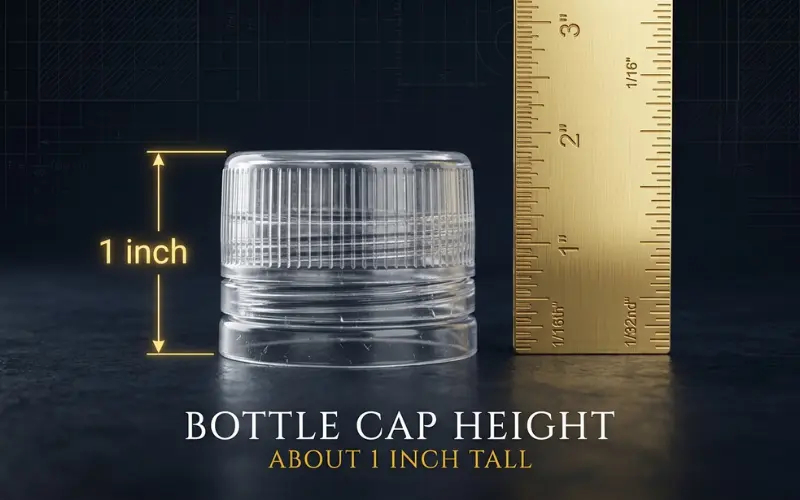
A bottle cap is another familiar object that helps you visualize a measurement close to 1 inch. Many small drink bottle caps have a height or width that is near this size.
Look at a bottle cap from the side and compare it with your fingers. Its compact shape gives a good idea of how small 1 inch really is.
Approximate size: Around 1 inch tall (varies by bottle type)
4. A small dice
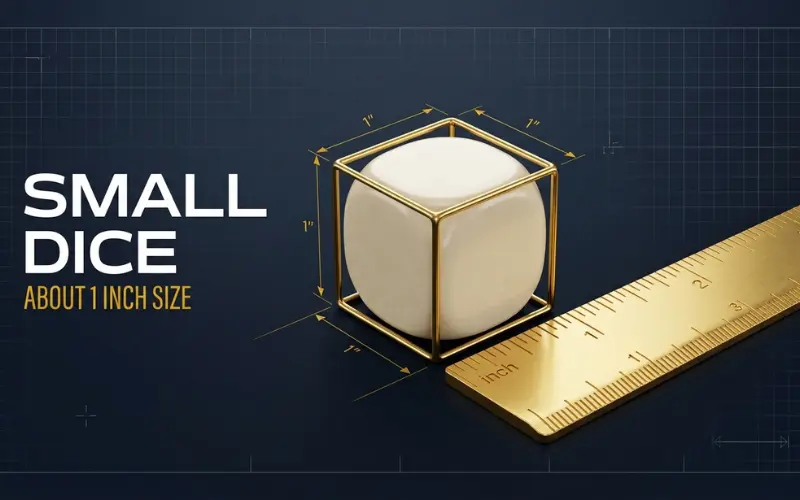
A small dice used in board games is a simple cube that helps explain the size of 1 inch. Many standard dice are close to this measurement, although some gaming dice can be smaller or larger.
Because it has equal sides, a dice gives you a clear visual example of how much space one inch occupies in three dimensions.
Approximate size: About 0.6–1 inch on each side
5. A coin (approximate)
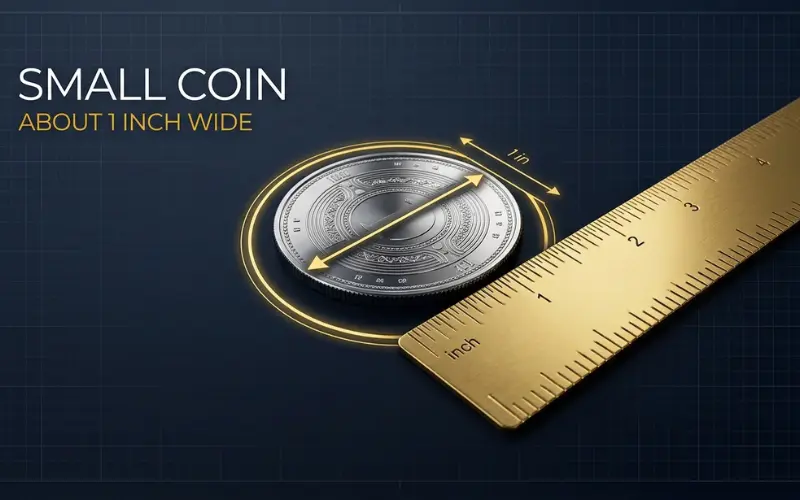
Coins are useful size references because almost everyone has handled them before. While most coins are smaller than 1 inch, some larger coins come close enough to help visualize this measurement.
Comparing a coin with your thumb or another small object makes it easier to understand the difference between a fraction of an inch and a full inch.
Approximate size: Around 0.7–1 inch wide (depends on coin type)
6. Keyboard key width
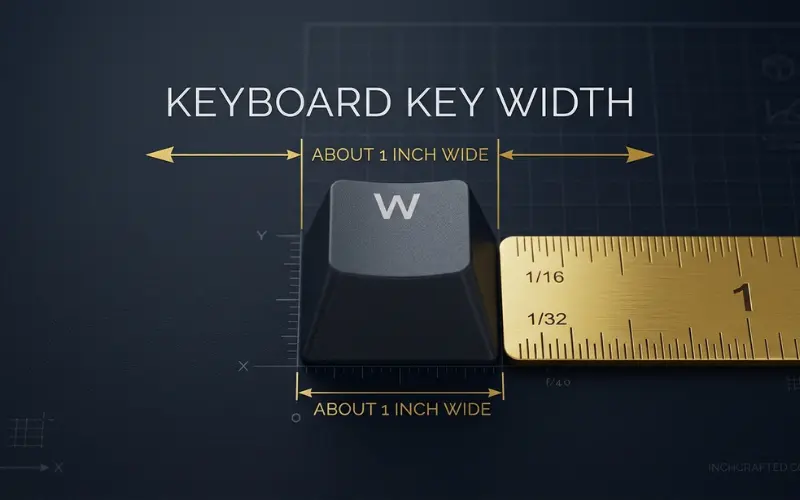
A keyboard key is something many people touch hundreds of times a day without noticing its size. Many standard keyboard keys are close to 1 inch wide.
Looking at the space between the edges of a single key can help you understand how manufacturers use small measurements to create comfortable everyday products.
Approximate size: Around 0.6–1 inch wide
7. USB connector head
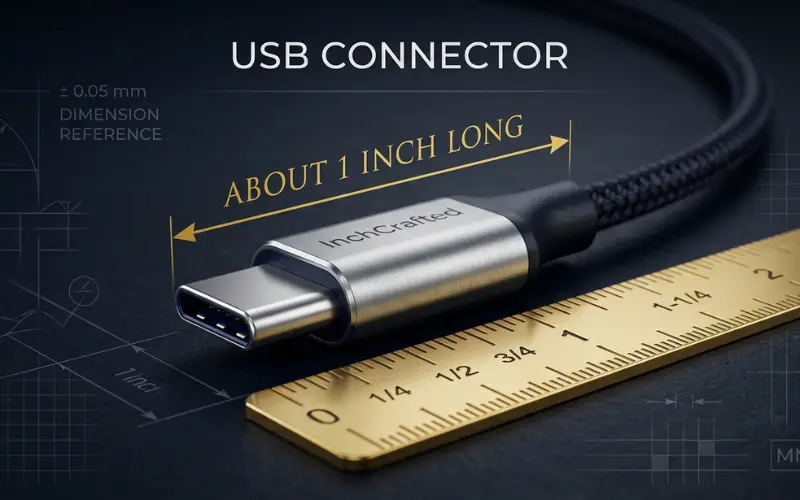
The end of a USB cable is a great example of a small object that is close to 1 inch in size. The connector is designed to be compact while still large enough to handle and insert easily.
Pick up a charging cable and compare the metal connector with your fingers. It gives a practical example of how much space 1 inch represents.
Approximate size: Around 1 inch long (depends on USB type)
8. Pencil eraser
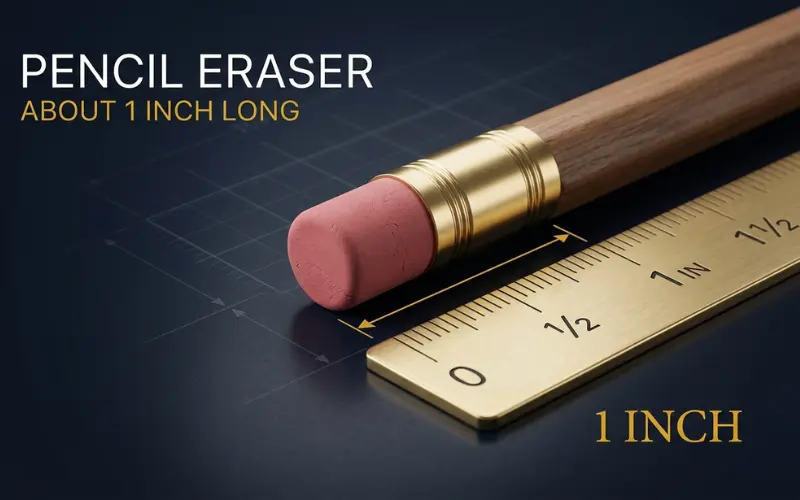
The eraser at the end of a pencil is another familiar object that can help you imagine 1 inch. Many standard pencil erasers are close to this measurement.
Because most people used pencils during school years, this object creates an easy visual connection with a small length.
Approximate size: Around 0.7–1 inch long
9. Shirt button
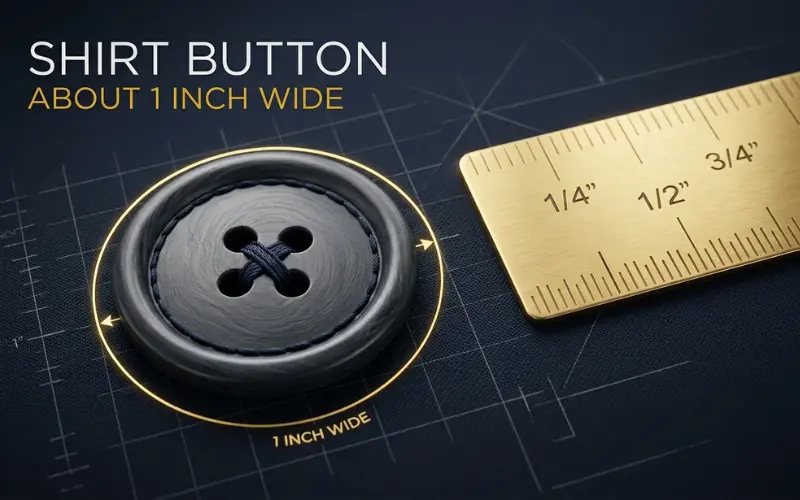
A shirt button is a common household item that shows how small 1 inch really is. Although many buttons are less than an inch, larger buttons used on coats or shirts can approach this size.
Comparing a button with your thumb gives a quick way to estimate this measurement.
Approximate size: Around 0.5–1 inch wide
10. SIM card tray
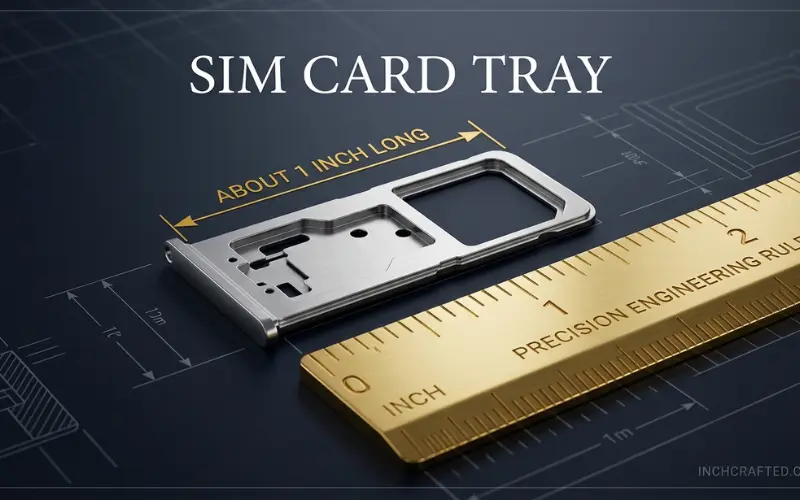
A SIM card tray from a smartphone is a small but precise piece of hardware. Many phone trays are close to 1 inch long, although the exact size depends on the device model.
This is a good example of how manufacturers use tiny measurements when creating modern electronics.
Approximate size: Around 1 inch long
11. Small LEGO block
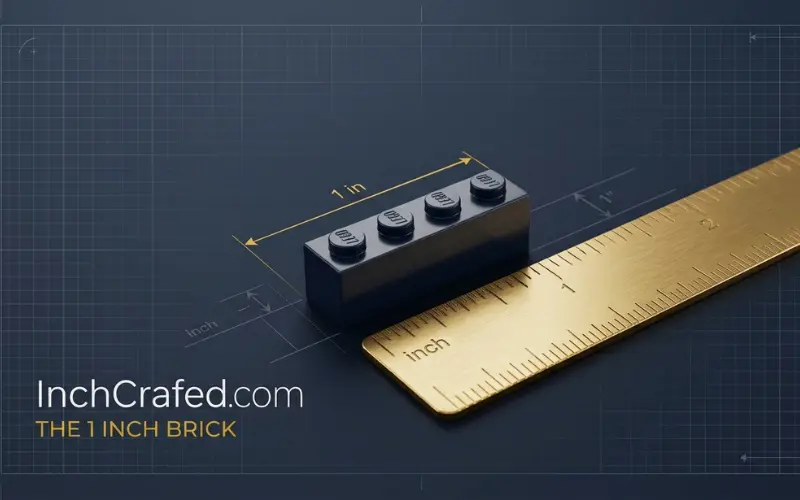
A small LEGO piece is another object that makes 1 inch easier to visualize. Many classic LEGO pieces have dimensions close to this measurement.
Because LEGO blocks are designed with consistent sizing, they provide a useful example of how small measurements are used in everyday objects.
Approximate size: Around 0.8–1 inch long
12. Mini candle width
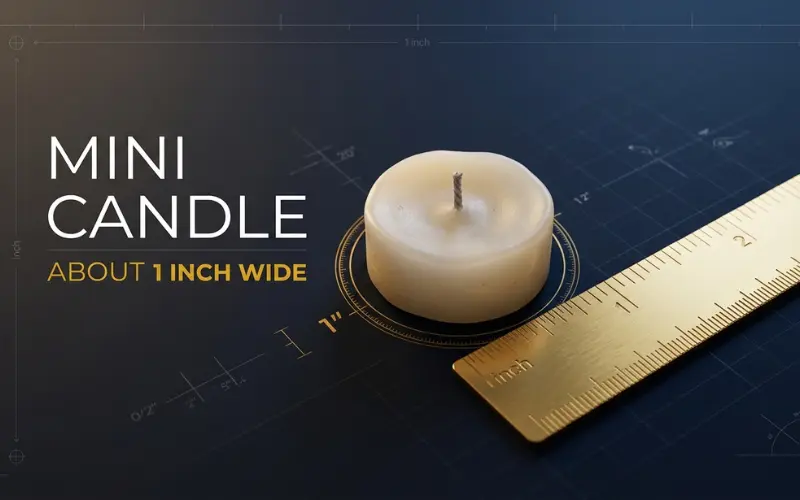
A small candle, especially a compact decorative candle, can also help you understand the size of 1 inch. The width of some mini candles is close to this measurement.
Looking at the circular base of a small candle gives you another simple visual reference for recognizing one inch.
Approximate size: Around 1 inch wide
How to Measure 1 Inch Without a Ruler
If you don’t have a ruler nearby, you can still get a good idea of what 1 inch looks like by comparing it with familiar objects around you.
One of the easiest references is your thumb. For many adults, the width of the thumb is close to 1 inch, making it a quick way to estimate small measurements. Keep in mind that hand sizes are different, so this method is only an approximation.
You can also compare 1 inch with common household items. A small paperclip, keyboard key, bottle cap, USB connector, or button can help you understand this size visually. These everyday references make it easier to estimate measurements when you do not have a measuring tool available.
Your finger joints can also work as a simple guide. The small sections between your finger joints are often close to an inch, although the exact size varies from person to person.
These methods are useful for quick estimates while shopping, crafting, or checking product sizes. However, if you need an exact measurement for construction, design, or technical work, always use a ruler or measuring tape.
Household Items That Are Around 1 Inch
Once you start looking closely, you will notice that many small objects around your home are close to 1 inch in size. These everyday items make it easier to visualize this measurement because they are familiar and easy to compare.
Small Office Supplies
Many desk items are useful references for understanding 1 inch. A small paperclip, pencil eraser, push pin, or binder clip section can give you a quick idea of how much space one inch covers.
These objects are designed to be compact while still being easy to handle, which is why many of them fall close to this size range.
Kitchen Items
Your kitchen also has several small objects that can help you recognize 1 inch. Bottle caps, small spice container lids, and certain kitchen accessories often have parts that are around an inch wide or tall.
Looking at these objects from the side can help you better understand the actual size of this measurement.
Electronic Accessories
Modern technology uses many tiny measurements, and 1 inch appears frequently in small electronic parts. USB connectors, memory cards, charging accessories, and device components often include sections that are close to this size.
These examples show why accurate small measurements are important in electronics manufacturing, where even a small difference can affect how parts fit together.
Clothing and Personal Items
Small clothing accessories can also provide useful comparisons. Buttons, snaps, zipper parts, and jewelry pieces often fall near the 1-inch range.
Although these items are not always exactly one inch, they provide a helpful visual reference when you need to estimate size quickly.
By connecting 1 inch with objects you already see every day, this measurement becomes much easier to recognize. Instead of thinking of it as only a number, you can picture the actual space it takes up in the real world.
Why Is 1 Inch Used So Often?
A single inch may seem insignificant, but it plays a big role when accuracy matters. Many products and designs depend on small measurements to maintain the right size, fit, and function.
In electronics, inch measurements are commonly seen in small components, connectors, and accessories where precise sizing is necessary. A slight difference can affect how parts connect or fit together.
In fashion and tailoring, even a small measurement change can affect the final look of clothing. Buttons, seams, patterns, and accessories often rely on exact sizing.
The same applies to crafts, repairs, and DIY work. Measuring small spaces correctly helps prevent mistakes and creates cleaner results.
Knowing the size of 1 inch is also useful when buying products online. Instead of guessing from a description, you can compare the measurement with objects you already know.
Although it is a small unit, the inch remains a practical measurement because many things we use every day are designed around these smaller dimensions.
See Also
FAQs
How long is 1 inch exactly?
One inch is exactly 2.54 centimeters or 25.4 millimeters. It is a small unit of length commonly used for measuring objects, parts, and dimensions.
What does 1 inch look like without a ruler?
Without a ruler, you can estimate 1 inch by comparing it with small objects such as a paperclip, keyboard key, or the width of a thumb. These references can give you a quick idea of the size.
Is 1 inch bigger than 1 centimeter?
Yes. One inch is larger than one centimeter. A single inch equals 2.54 centimeters, which means it is more than twice the length of a centimeter.
How many inches make a foot?
There are 12 inches in 1 foot. This is one of the most common conversions in the imperial measurement system.
Can I measure 1 inch with my thumb?
You can use your thumb as a rough estimate. For many adults, the width of the thumb is close to 1 inch, but the exact size changes from person to person.
What everyday items are close to 1 inch?
Small objects such as paperclips, buttons, USB connectors, keyboard keys, and small blocks are often close to 1 inch in size. The exact measurement depends on the specific item.
Why are inches still used today?
Inches are still widely used for product sizes, tools, construction measurements, electronics, and many everyday items, especially in countries that use the imperial system.
Is 1 inch a small measurement?
Yes, 1 inch is considered a small measurement. It is mainly used when measuring compact objects, small parts, and detailed dimensions where accuracy matters.
Conclusion
One inch may be a small measurement, but it appears in many objects and products we use every day. A paperclip, button, USB connector, or other small item can help you get a quick idea of what this size looks like.
Knowing that 1 inch equals 2.54 centimeters makes it easier to compare measurements when shopping, creating projects, or checking product dimensions. While these examples are useful for estimation, a ruler or measuring tool is always the best choice when exact accuracy is needed.