
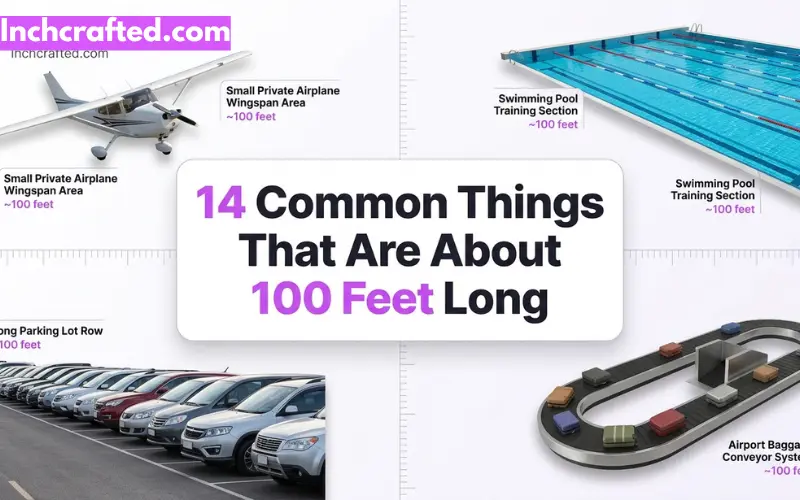
14 common things that are about 100 feet long
100 feet equals 1,200 inches, 33.33 yards, and approximately 30.48 meters. It is about the length of a tennis court, a small airplane wingspan area, a long parking row, or a warehouse aisle, which makes it easy to picture how long is 100 feet in real life.
If you are trying to understand how long is 100 feet, it can feel difficult to imagine just from numbers. That’s why people search for terms like how long is 100 feet visually, how long is 100 feet example, and how long is 100 feet comparison.
In real life, 100 feet is a large but common measurement used in construction, sports grounds, roads, agriculture, and industrial spaces. Since 100 feet equals 1,200 inches, 33.33 yards, and 30.48 meters, real-world comparisons make it much easier to picture.
This guide explains how long is 100 feet in inches, meters, yards, miles, and real-life objects in a simple and visual way.
How Long Is 100 Feet in Inches, Yards, Meters, and Miles?
| Unit | Value |
| Feet | 100 ft |
| Inches | 1,200 in |
| Yards | 33.33 yd |
| Meters | 30.48 m |
| Miles | 0.0189 miles |
How Long Is 100 Feet Visually?
If you want to know how long is 100 feet visually, imagine:
- A full tennis court length
- A small airplane wingspan area
- A long row of parked cars
- A wide warehouse aisle
- A large swimming pool length
These comparisons help you quickly understand the real size without measuring tools.
Why 100 Feet Is a Common Measurement
The length of 100 feet is commonly used in construction, sports facilities, landscaping projects, transportation planning, and property measurements. It is large enough to represent substantial spaces while still being easy to estimate. Because it appears in so many industries, 100 feet has become one of the most recognized distance measurements for visual comparisons and real-world planning.
📏 100 Feet Conversion Table
If you’re searching how long is 100 feet, this table shows quick conversions into inches, yards, meters, centimeters, and miles.
| Unit | Equivalent |
|---|---|
| Feet | 100 ft |
| Inches | 1200 in |
| Yards | 33.33 yd |
| Meters | 30.48 m |
| Centimeters | 3048 cm |
| Millimeters | 30480 mm |
| Miles | 0.0189 miles |
What Does 100 Feet Look Like Next to a Person?
An average adult stands between 5.5 and 6 feet tall. If about 17 average-height adults were lying head-to-toe in a straight line, they would cover approximately 100 feet. This comparison makes it much easier to picture the actual distance because most people can quickly imagine a line of people standing together.
| Comparison | Approximate Quantity |
| Adults Standing Head-to-Toe | 17–18 People |
| Walking Steps | 40 Steps |
| Standard Doors | 33 Doors |
| Shopping Carts | 25–30 Carts |
How Long Is 100 Feet to Walk?
Average step = 2.5 feet
👉 100 ÷ 2.5 = 40 steps
So, how long is 100 feet to walk?
It takes around 38–42 walking steps for most adults.
How Long Is 100 Feet on the Road?
On roads, 100 feet is roughly one-third of a city block in many urban areas. It is commonly used for:
- Parking distance
- Traffic spacing
- Construction marking
- Road safety zones
How Long Is 100 Feet Compared to a House?
Many single-family homes are between 40 and 60 feet wide. A distance of 100 feet is often longer than the width of an average house and can stretch across a large portion of a residential lot. This makes it a useful reference for homeowners planning fences, gardens, driveways, and outdoor projects.
How Long Is 100 Feet Compared to Vehicles?
Vehicles provide one of the easiest ways to estimate distance because they are familiar to almost everyone. About seven average sedans parked bumper-to-bumper would measure close to 100 feet. Similarly, several pickup trucks or SUVs lined up in a row can create a visual comparison that closely matches the length.
| Vehicle Comparison | Approximate Length |
| 7 Sedans | ~100 Feet |
| 6 SUVs | ~100 Feet |
| 5 Pickup Trucks | ~95–105 Feet |
| 2 City Buses | ~90–100 Feet |
How Long Is 100 Feet Compared to Sports Fields?
Sports facilities offer some of the best references for understanding long distances because their dimensions are standardized. A basketball court is 94 feet long, making it slightly shorter than 100 feet. A tennis court and training lanes can also help create a realistic picture of the measurement.
| Sports Reference | Length |
| Basketball Court | 94 Feet |
| Tennis Court | 78 Feet |
| Volleyball Court | 59 Feet |
| 100 Feet | Slightly Longer Than a Basketball Court |
How Long Is 100 Feet LED Lights?
A 100-foot LED light string is used for:
- Large outdoor events
- Wedding decorations
- Garden fencing
- Building rooftops
- Commercial lighting setups
It gives a clear visual idea of long-distance coverage.
How Long Is 100 Feet Hose?
A 100-foot hose is commonly used in:
- Large gardens
- Farms and irrigation
- Car washing stations
- Construction sites
It covers wide outdoor areas without moving the water source.
14 Real-Life Things That Are About 100 Feet Long
Knowing how long is 100 feet becomes much easier when you compare it with real-world objects and structures. Since 100 feet equals 1,200 inches, 33.33 yards, and 30.48 meters, these examples can help you visualize the distance more accurately. From sports facilities and transportation equipment to industrial spaces and outdoor structures, the comparisons below provide a practical way to understand what 100 feet looks like in everyday life.
1. Tennis Court Length
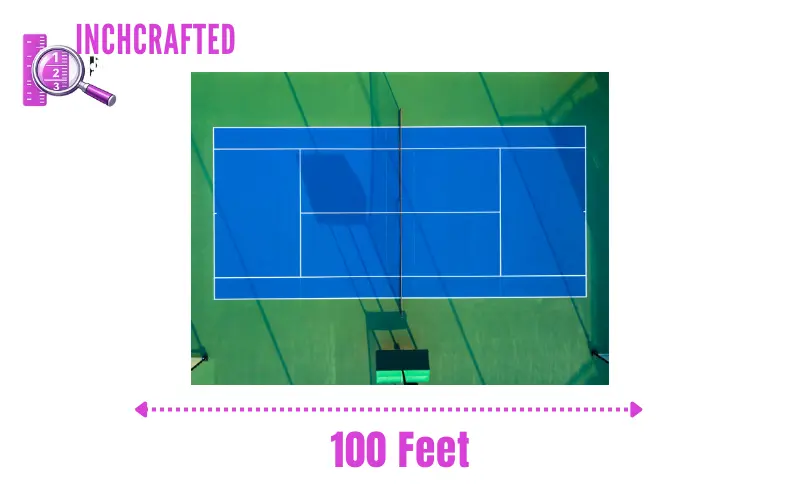
A tennis court is one of the easiest ways to visualize how long 100 feet is. While the official playing area measures 78 feet, the total space including safety zones and run-off areas can approach 100 feet. Players regularly cover much of this distance during a match. Because tennis courts are found in schools, parks, and sports clubs, they provide a familiar visual reference. If you have ever stood next to a full-size court, you already have a good sense of what 100 feet looks like.
2. Small Private Airplane Wingspan Area
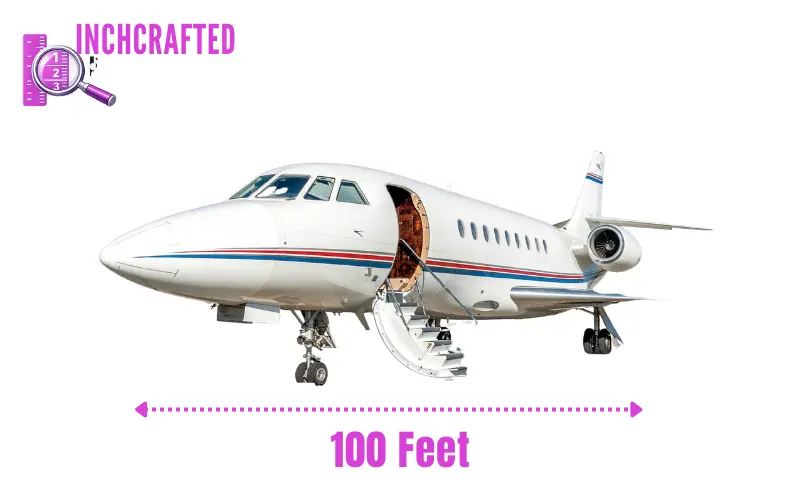
Some business jets and private aircraft have wingspans that come close to 100 feet. Standing near one of these airplanes quickly reveals how large this measurement really is. Aircraft designers use wide wingspans to improve lift and stability during flight. Airports and aviation facilities often feature planes of this size. Comparing 100 feet to an aircraft makes the distance easier to imagine because the scale is immediately noticeable.
3. Large Warehouse Storage Block
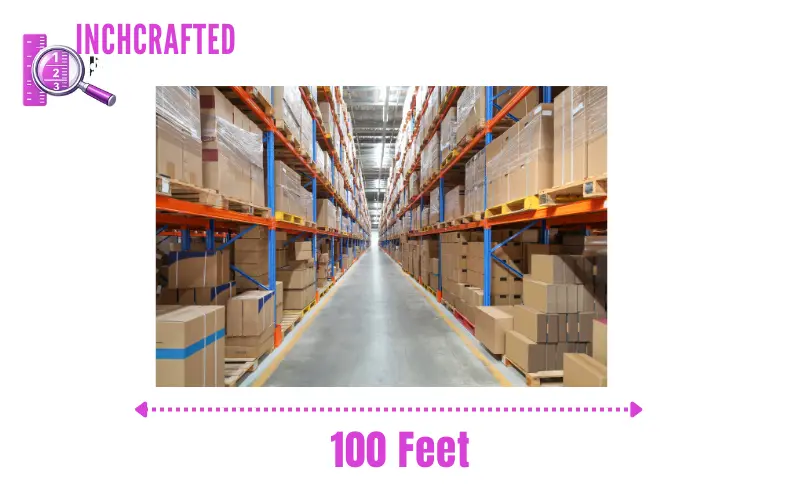
Modern warehouses are designed with long storage sections that can easily stretch close to 100 feet. These areas are used for storing inventory, shipping goods, and organizing logistics operations. Forklifts travel through these long aisles every day while moving products. Because warehouses prioritize efficient use of space, their layouts provide an excellent example of long distances. A single storage block can give a realistic picture of what 100 feet looks like indoors.
4. Swimming Pool Training Section

Large training pools often contain swimming lanes and practice zones that approach 100 feet in length. Competitive swimmers repeatedly travel these distances during workouts and events. Looking down a long lane provides a clear visual representation of the measurement. Sports facilities use these dimensions to help athletes build endurance and speed. The straight, uninterrupted length makes it easy to estimate 100 feet.
5. School Sports Field Segment
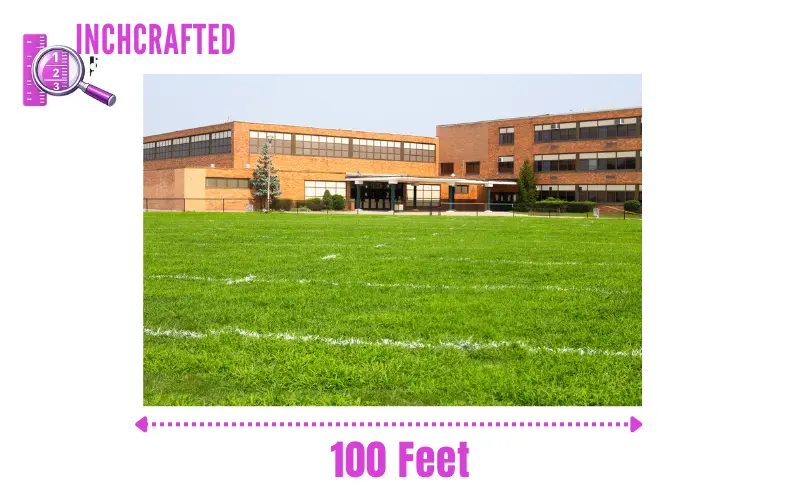
Many school athletic fields contain straight sections that measure close to 100 feet. Students use these areas for running drills, physical education classes, and sports practice. Because these fields are open and easy to view from a distance, they offer a strong visual reference. Coaches often use measured sections of fields to organize training activities. This makes sports grounds one of the most relatable examples of a 100-foot distance.
6. Long Parking Lot Row
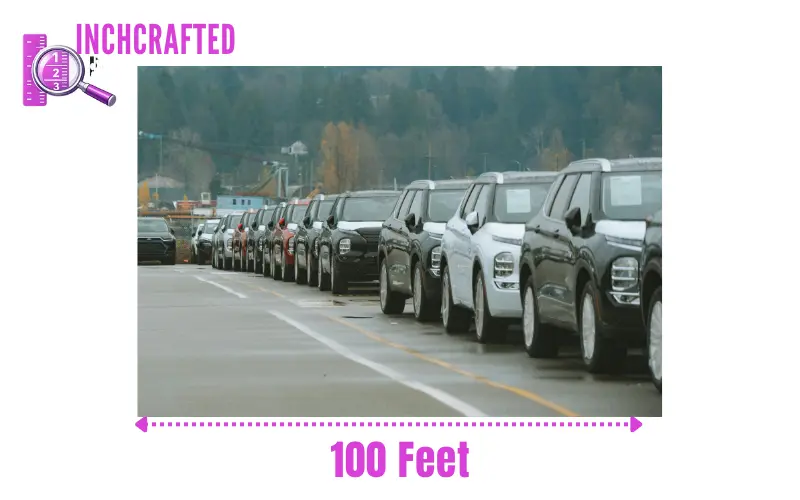
A row of parked vehicles can often stretch to about 100 feet depending on the number and size of the cars. In shopping centers, stadiums, and office complexes, these rows are easy to spot. Seeing multiple vehicles lined up bumper-to-bumper provides an immediate understanding of the distance. Parking lots are familiar places that most people encounter regularly. This makes them useful for estimating lengths without a measuring tool.
7. Botanical Garden Walking Path
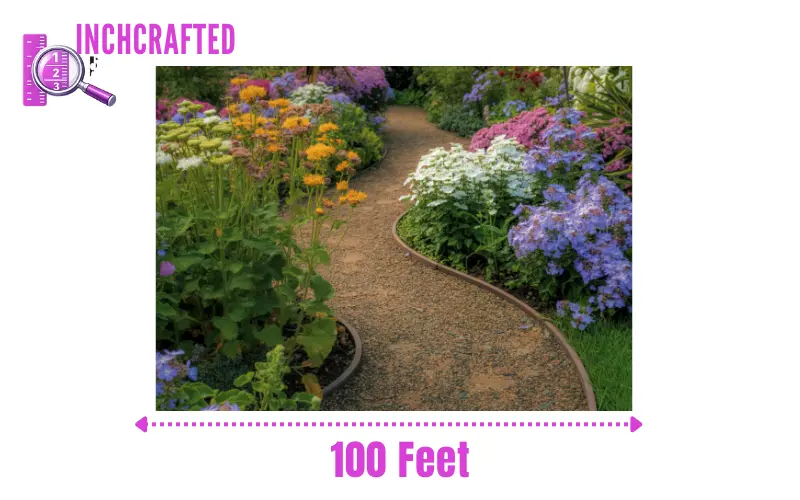
Large botanical gardens frequently include pathways that extend close to 100 feet between major attractions. Visitors walk these routes while exploring different plant collections and landscape features. The long, straight paths allow people to experience the distance firsthand. Because the entire length is visible at once, it becomes easier to judge the scale. Garden paths provide a peaceful and realistic comparison for 100 feet.
8. Commercial Billboard Support Structure
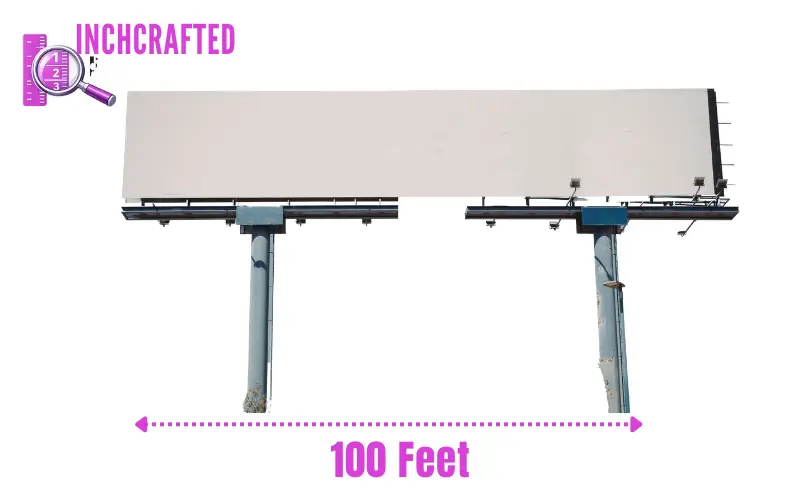
Major roadside billboards often rely on large support structures and framework that can extend close to 100 feet in total length. These installations are designed to remain visible from long distances. Construction crews use heavy materials and precise engineering to build them safely. The size of these structures becomes obvious when viewed from nearby roads. Their large scale makes them a useful example of a 100-foot measurement.
9. Industrial Pipeline Section
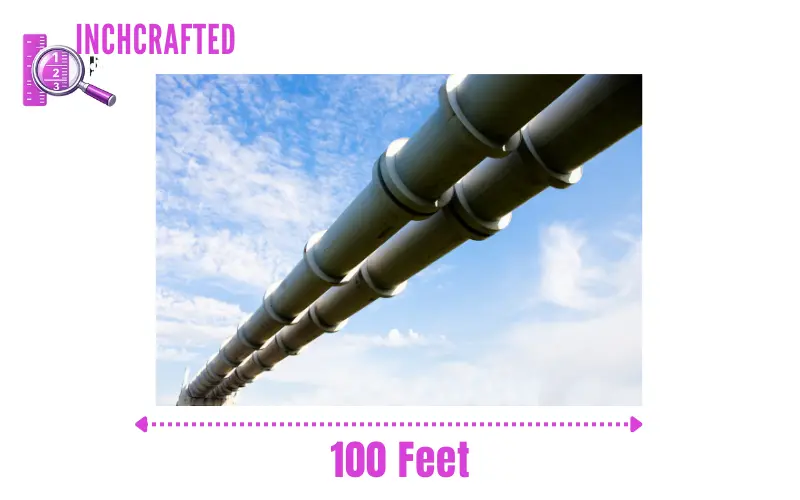
Factories, refineries, and processing facilities frequently use pipeline sections that run for approximately 100 feet before changing direction or connecting to another system. These pipelines transport water, fuel, gas, or industrial materials. Their long, uninterrupted design makes them easy to compare with measured distances. Industrial sites often contain multiple sections of similar length. This provides another practical way to visualize 100 feet.
10. Cruise Ship Interior Corridor
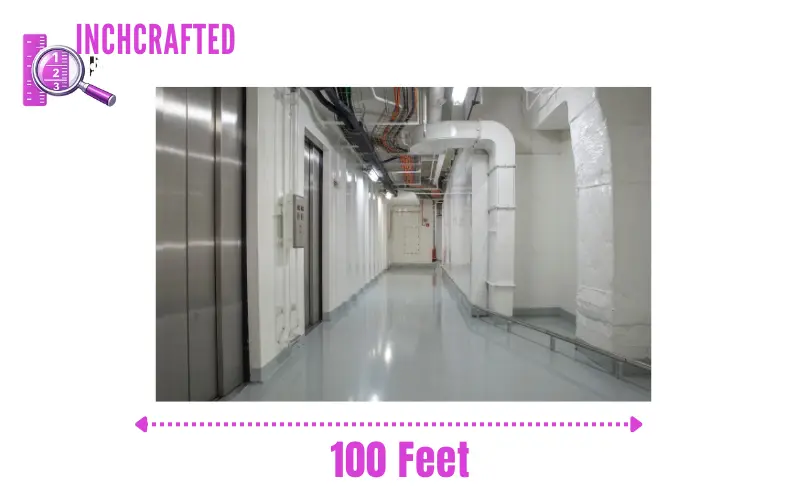
Large cruise ships feature corridors that can stretch close to 100 feet between stairways, restaurants, and passenger cabins. Walking through these hallways gives travelers a real sense of the distance. Because cruise ships maximize available space, long corridors are common throughout the vessel. The enclosed design allows passengers to see much of the length at once. This makes them an effective example of a 100-foot span.
11. Airport Baggage Conveyor System
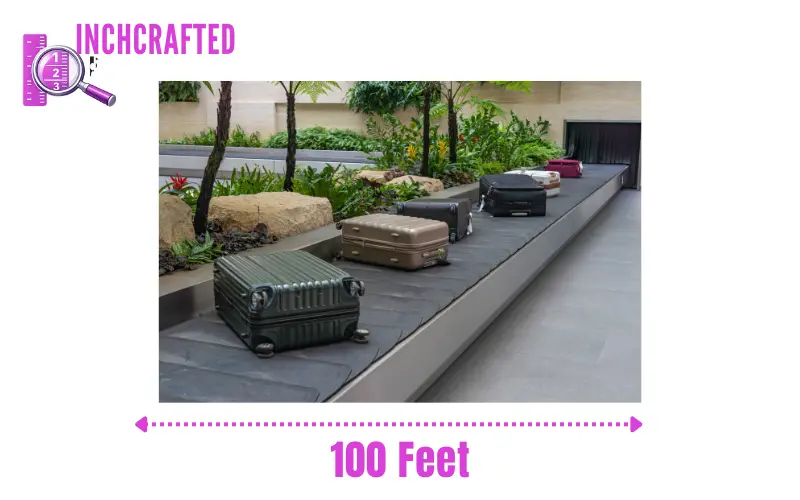
Airport baggage handling systems often contain conveyor sections measuring close to 100 feet. These conveyors move luggage efficiently between check-in areas, sorting facilities, and aircraft loading zones. Watching bags travel along a long conveyor helps demonstrate the scale of the distance. Airports rely on these systems to handle thousands of bags every day. Their length provides a practical visual comparison.
12. Agricultural Irrigation Line

Large farms commonly use irrigation lines that extend well beyond 100 feet across crop fields. A single visible section can often measure close to this length. These systems help distribute water efficiently to plants over wide areas. Farmers depend on long irrigation networks to maintain healthy crops. Because the lines are straight and easy to see, they make excellent examples of a 100-foot distance.
13. Outdoor Event Tent Structure
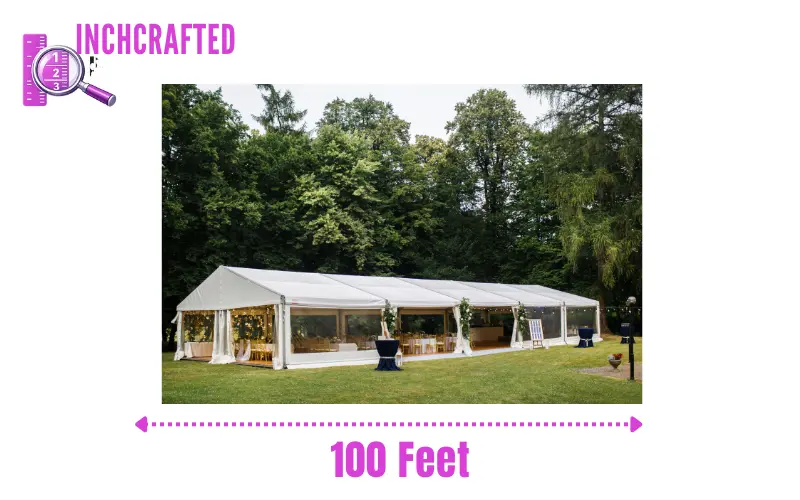
Large event tents used for weddings, festivals, and exhibitions often stretch close to 100 feet from end to end. These structures are designed to accommodate large crowds and multiple activity areas. Their size becomes obvious when viewed from the outside or while walking through them. Event planners frequently use tents of this scale for major gatherings. This makes them a useful real-life comparison.
14. Highway Safety Barrier Stretch
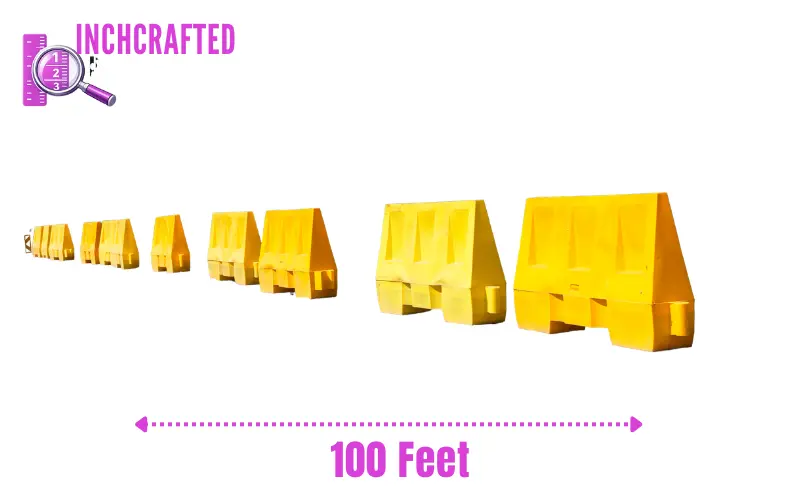
Highway safety barriers are often installed in long sections, with individual stretches measuring around 100 feet. These barriers help guide traffic and protect vehicles from hazards. Drivers encounter them regularly on highways, bridges, and construction zones. Because they are designed as straight, continuous structures, their length is easy to estimate visually. They provide one of the most common real-world examples of a 100-foot measurement.
100 Feet Comparison Table
| Object | Length |
| Tennis Court | ~100 ft |
| Small Airplane Wingspan | ~100 ft |
| Warehouse Block | ~100 ft |
| Parking Row | ~100 ft |
| Garden Path | ~100 ft |
100 Feet Comparison With Other Lengths
| Length | Comparison |
| 30 ft | Much shorter |
| 50 ft | Half |
| 70 ft | Shorter |
| 90 ft | Close |
| 100 ft | Reference |
See Also
FAQs
How long is 100 feet in inches?
100 feet = 1,200 inches
How long is 100 feet in meters?
100 feet = 30.48 meters
How long is 100 feet in yards?
100 feet = 33.33 yards
How many steps is 100 feet?
Around 40 steps
How long is 100 feet in miles?
100 feet = 0.0189 miles
Conclusion
By comparing it with familiar real-world objects, 100 feet becomes much easier to picture than numbers alone. Whether you think of a tennis court, a private airplane wingspan, a long warehouse aisle, or a row of parked vehicles, these examples provide a clear sense of scale.
At 1,200 inches, 33.33 yards, and 30.48 meters, 100 feet is a measurement commonly seen in sports, construction, transportation, and large outdoor spaces. Using these visual comparisons, conversions, and everyday examples, you can quickly estimate and recognize how long 100 feet is in real-life situations without needing a measuring tape.

One Comment